Yes — you can find which cylinder is misfiring without a scan tool. A scanner is faster because it reads the cylinder number straight off the trouble code, but the underlying fault is physical, and physical faults can be found with hand tools, your senses, and a systematic process of elimination. This guide walks through five reliable methods, from the fastest to the most thorough, plus the safety points that matter when you are working on a running engine.
First, confirm it really is a misfire
A misfire is combustion failing in one or more cylinders. Before you hunt for the cylinder, make sure the symptoms fit:
Shaking or rough idle that smooths out as engine speed rises (or gets worse under load).
A flashing check-engine light — this specifically warns of an active misfire severe enough to damage the catalytic converter. Stop driving hard until it is fixed.
A stumble or hesitation on acceleration, and noticeably down on power.
A sharp, uneven "puff-puff" at the tailpipe instead of a smooth exhaust note, sometimes with a raw-fuel smell.
If that matches what you have, work through the methods below. Do them with the engine at a safe idle, on level ground, parking brake set, and keep hands and tools clear of belts and the cooling fan.
Method 1: The cylinder cut-out test
This is the single most reliable no-scanner method, and it needs no special tools. The idea is simple: a cylinder that is already misfiring is contributing little or nothing, so "cutting it out" changes the idle very little — while cutting out a healthy cylinder makes the idle drop and roughen noticeably.
With the engine idling, disconnect the electrical connector to one ignition coil (on coil-on-plug engines) or one fuel injector. Do this one cylinder at a time.
Listen and feel. On a good cylinder the idle will drop and shake more. On the dead cylinder, cutting it out makes little or no difference — because it was barely firing to begin with.
Reconnect that cylinder, let the idle settle, and move to the next one. Work through them in firing order and note which one "did nothing."
Safety: never pull a plug wire off a running engine by hand — unplug the coil or injector connector instead, to avoid a shock and to protect ignition components. Reconnect each cylinder before moving on, and keep the test brief: running a cylinder with fuel but no spark dumps raw fuel into the exhaust and can overheat the catalytic converter. Disconnecting coils/injectors will usually store a code — clear it afterward with any basic reader, or it will clear itself after several good drive cycles.
Method 2: Read the spark plugs
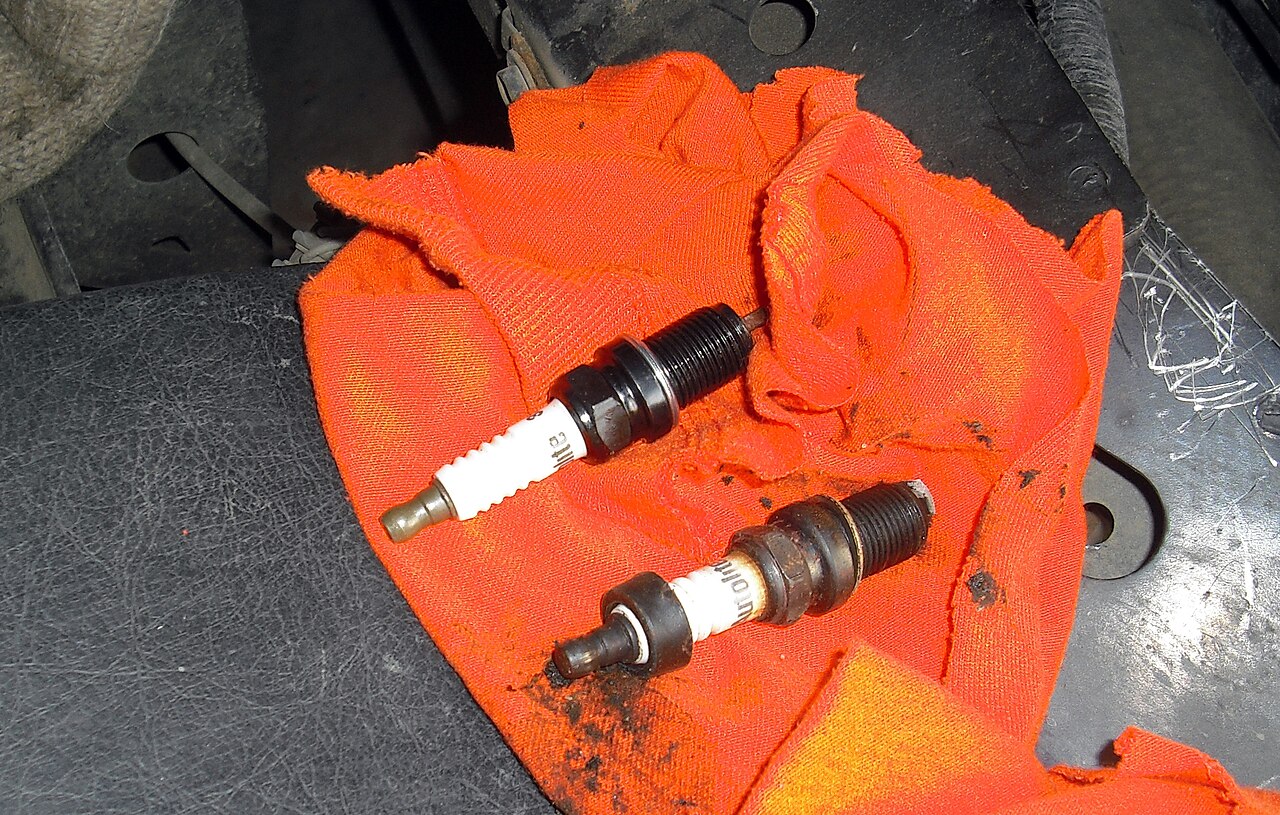
A worn plug next to a fresh one. Pull each cylinder's plug and compare — the odd one out (oil-fouled, wet with fuel, or carbon-caked) often marks the misfiring cylinder. Photo: Myke2020, public domain (Wikimedia Commons).
Pull the plugs (engine cold) and lay them out in cylinder order. The plug from the misfiring cylinder frequently looks different from the rest:
Wet with fuel — no spark, or fuel with no combustion.
Black and oily — oil getting past rings or valve seals in that cylinder.
Dry black soot — that cylinder is running rich.
Cracked insulator, closed gap, or a bridged/melted electrode — a physically failed plug.
A plug that looks obviously different from its siblings is a strong lead. If all the plugs look the same and healthy, the misfire is more likely coil, injector, compression, or a vacuum/wiring issue — keep going.
Method 3: Compare exhaust runner temperatures
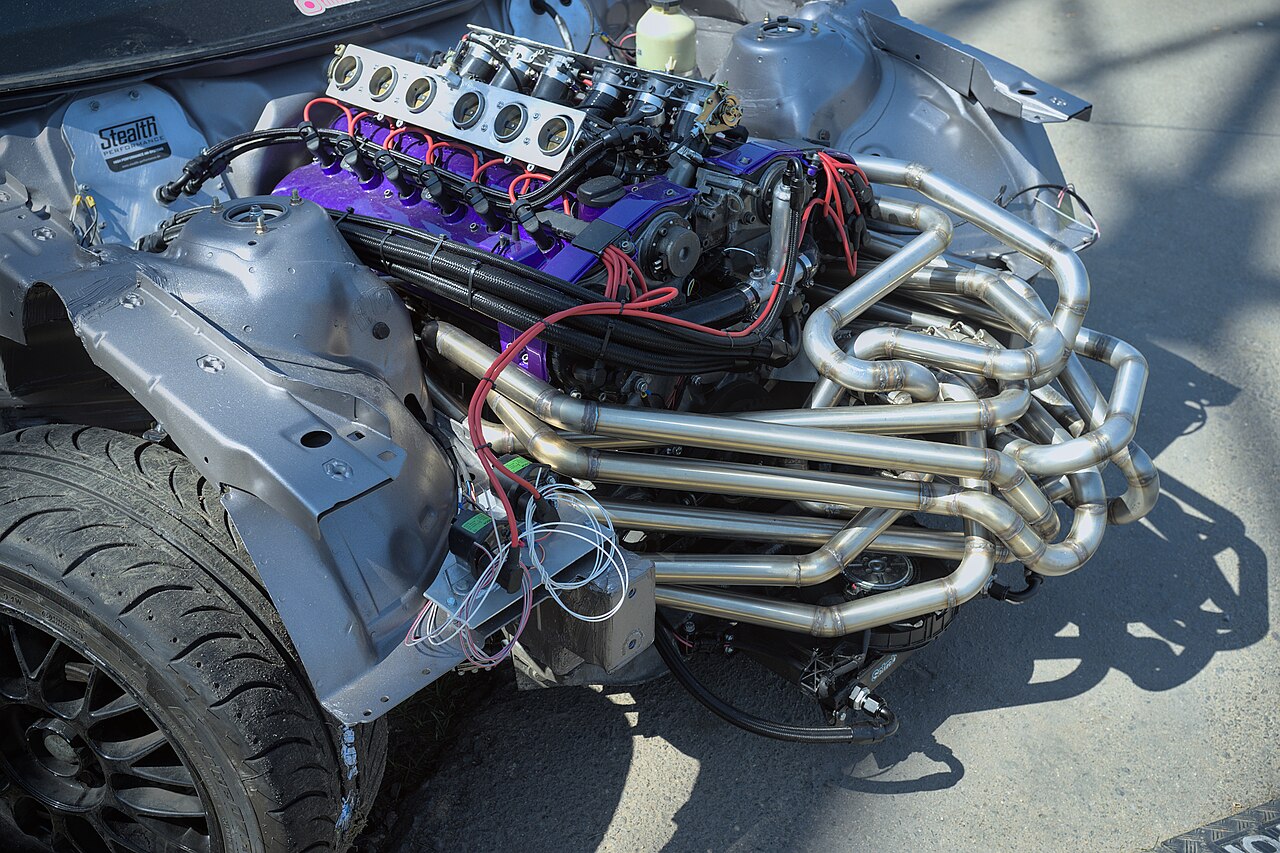
Each exhaust runner carries one cylinder's gases. With the engine idling, an infrared thermometer aimed at each runner reveals the dead cylinder as a noticeably cooler one. Photo: Lewis Collard, CC0 (Wikimedia Commons).
This non-invasive test is a favorite of experienced techs. A firing cylinder produces heat; a dead one does not. Start the engine cold, let it idle for a couple of minutes, then point an infrared (laser) thermometer at the exhaust runner or port for each cylinder, as close to the head as you can safely reach.
Healthy cylinders read within a fairly tight band of each other.
The misfiring cylinder's runner reads noticeably cooler — sometimes by 40 °C (70 °F) or more.
Safety: exhaust components get hot fast — measure early, keep your hands off the metal, and mind the moving belts and fan. A cool runner confirms which cylinder is out, but not why; use Methods 2 and 4 to pin down the cause.
Method 4: Swap parts to confirm the cause
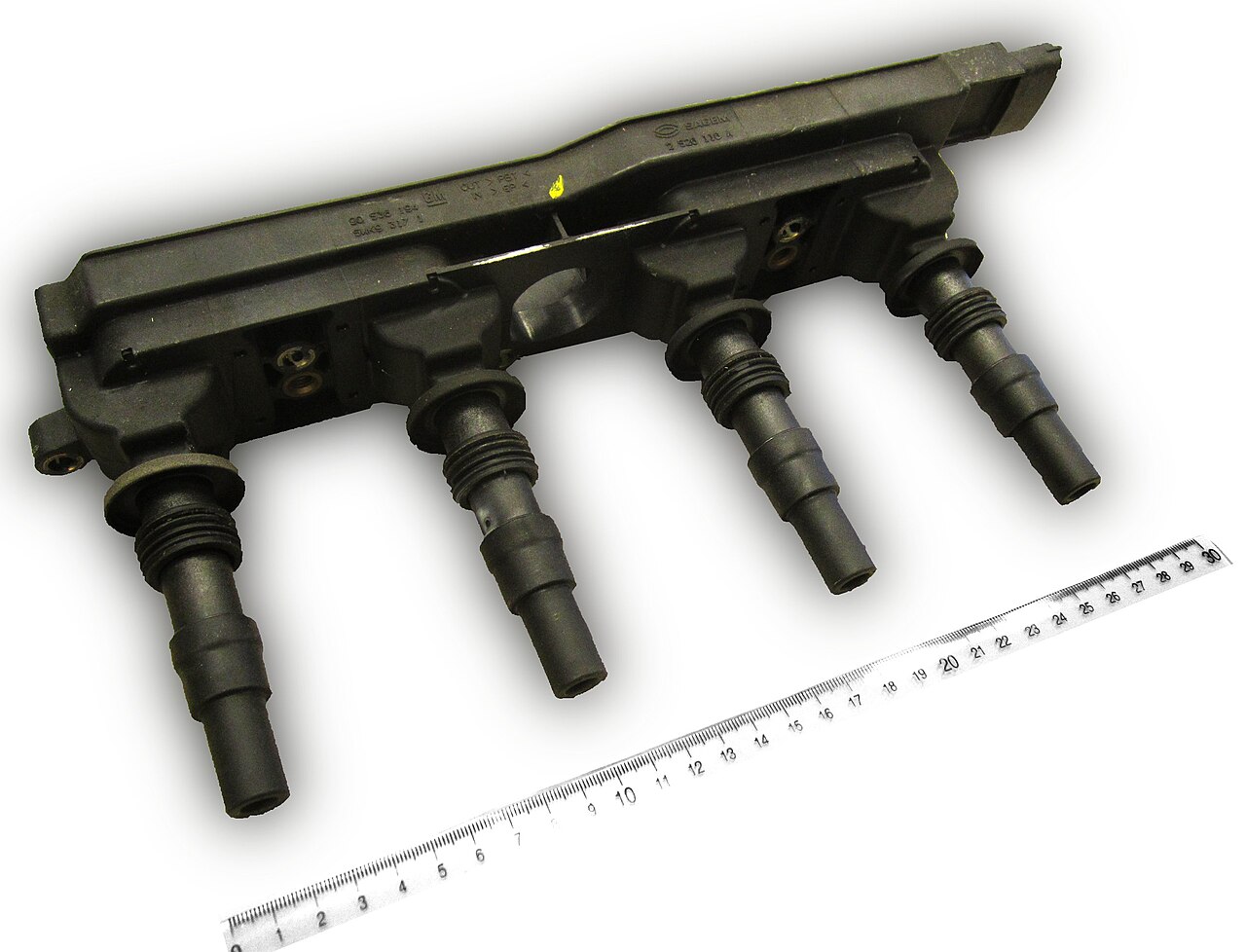
A coil-on-plug ignition coil. Swap the suspect coil to a known-good cylinder — if the misfire follows the coil, the coil is bad; if it stays put, the fault is in the cylinder. Photo: Cschirp, CC BY-SA 3.0 DE (Wikimedia Commons).
Once you know the cylinder, a swap test tells you whether the part or the cylinder is at fault. It is the cheapest way to confirm before buying anything:
Swap the ignition coil from the misfiring cylinder with one from a cylinder that runs fine. Restart and re-test. If the misfire moves to the new cylinder, the coil is bad. If it stays on the original cylinder, the coil is fine.
Swap the spark plug the same way if you suspect the plug.
Swap the injector (on port-injected engines) to test for a clogged or dead injector — the misfire will follow a bad injector.
If the misfire stays on the same cylinder after swapping coil, plug, and injector, the problem is mechanical — low compression from a burned valve, worn rings, or a head-gasket issue — or a wiring/connector fault feeding that cylinder.
Method 5: Feel and listen
Your senses are surprisingly good diagnostic tools:
Tailpipe test: hold your hand near (not on) the tailpipe. A steady push of air is normal; an irregular puff-puff with occasional suction is a classic misfire signature.
Hand on the valve cover / intake: you can often feel the uneven pulse and localize the roughness.
A length of hose to your ear (or a mechanic's stethoscope) held near each injector or coil lets you hear an injector clicking evenly — a silent one on the dead cylinder points to an electrical or injector fault.
A vacuum gauge on a manifold port will show a needle that drops and flicks regularly with a steady misfire.
Use the firing order to work smart
Knowing the engine's firing order speeds everything up: it tells you which physical cylinder you are testing and helps interpret patterns. On some engines two "companion" cylinders share a wasted-spark coil, so a single failed coil can make two cylinders misfire together — if two cylinders go out at once, check what they share (a coil, a connector, a ground) before condemning parts.
When you still want a scan tool
A basic code reader turns a 30-minute hunt into a 30-second answer: a P0300 means a random/multiple misfire, while P0301 through P0308 name the exact cylinder (the last digit is the cylinder number). A scanner also shows misfire counters and freeze-frame data — engine load, RPM, and temperature at the moment it happened — which point to the cause, not just the location. If you have access to one, start there, then use the hands-on methods above to confirm the fault. For that workflow see our companion guide on diagnosing engine misfires with scan tool data.
Safety and cautions
Don't drive with a flashing check-engine light — an active misfire can destroy the catalytic converter quickly.
Unplug coil/injector connectors, never yank plug wires off a running engine.
Keep cut-out tests brief so you don't load the exhaust with raw fuel.
Exhaust and engine parts are hot — respect them during the IR-temperature test.
Reconnect everything and clear any codes you set before your final test drive.
FAQ
Can I find a misfiring cylinder without any tools at all? Often yes — the cut-out test (unplugging a coil/injector by hand) and the tailpipe/feel tests need no tools. An infrared thermometer and a basic code reader are cheap and make it faster and more certain.
Is it safe to unplug a coil while the engine is running? Unplugging the coil's electrical connector is fine and is the correct way to do a cut-out test. Do not pull the high-tension plug wire off by hand on a running engine, and keep the test short.
Two cylinders are misfiring — what does that mean? Check what they share first. Companion cylinders on a wasted-spark coil can fail together, and a shared ground or connector can knock out two at once. A bad batch of fuel, low fuel pressure, or a big vacuum leak can also cause multiple misfires — a P0300 random-misfire pattern rather than one cylinder.
The misfire stays on the same cylinder after I swapped the coil and plug — now what? That points to the cylinder itself: a clogged or dead injector, low compression (burned valve, worn rings, head-gasket), or a wiring fault to that cylinder. A compression test is the next step.